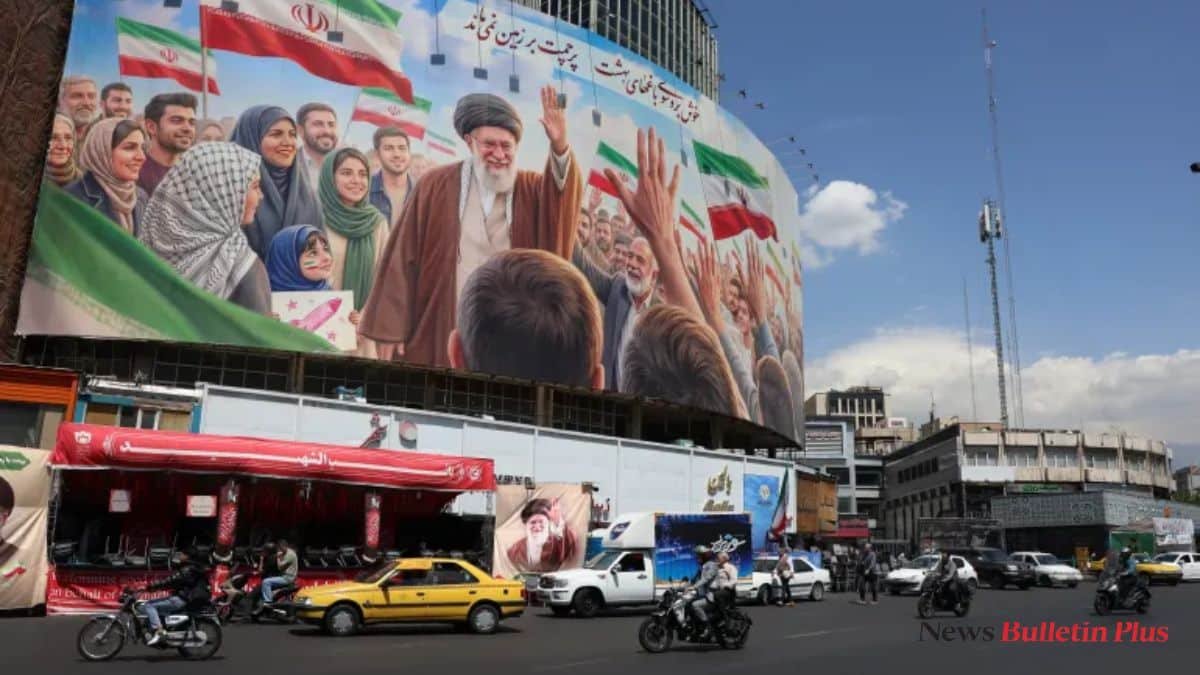
The idea of a Frozen Iran Conflict is no longer just a theoretical scenario discussed in policy circles. As Iran US tensions continue to simmer in 2026, analysts are increasingly warning that a direct war may not end with a decisive victory—but instead settle into something far more complicated: a prolonged, unresolved standoff.
This kind of situation—often described as a war without peace—could reshape not only the Middle East but also global markets, security alliances, and energy supplies for years to come.
What Happened
Recent developments have intensified fears of a US Iran war 2026, particularly following escalating incidents in and around the Strait of Hormuz. Reports of naval confrontations, drone interceptions, and indirect clashes involving allied militias have fueled speculation that both countries are inching closer to sustained conflict.
Yet, despite the rising hostility, neither Washington nor Tehran appears eager for a full-scale war. Instead, both sides are engaging in calibrated actions—enough to assert strength, but not enough to trigger total escalation.
This pattern has led experts to describe the current phase as a potential low intensity conflict, where sporadic violence replaces decisive military campaigns.
Background of the Story
To understand the possibility of a frozen conflict meaning in this context, it helps to look at history. Frozen conflicts are not new. Regions like Eastern Europe and parts of Asia have experienced long-running disputes where active fighting slows down, but no formal peace agreement is reached.
In the case of Iran and the United States, tensions date back decades—rooted in political mistrust, sanctions, and regional rivalries. Over time, these disputes have evolved into proxy battles across Iraq, Syria, and Yemen.
The current phase reflects a deeper strategic calculation. Both countries are wary of the economic and human costs of full-scale war, especially given the fragile state of the global economy and ongoing Middle East instability.


Reactions and Statements
Officials on both sides have adopted cautious yet firm rhetoric.
US defense officials have emphasized their readiness to respond to any direct threats, while also signaling a preference for deterrence over escalation. Meanwhile, Iranian leaders have framed their actions as defensive, warning against foreign interference in the region.
According to analysts at the International Crisis Group, the current situation reflects a “managed confrontation,” where both sides are testing limits without crossing red lines.
A regional security expert told Reuters, “This is not about winning a war. It’s about shaping the terms of engagement over time.”
Global or Political Impact
The implications of a prolonged ceasefire deadlock between the US and Iran could be far-reaching.
Global Oil Disruption
The Strait of Hormuz remains one of the most critical arteries for global energy supply. Roughly 20% of the world’s oil passes through this narrow channel. Any sustained Strait of Hormuz crisis could trigger significant global oil disruption, sending prices soaring and destabilizing economies.
Geopolitical Tensions
A drawn-out standoff would likely deepen geopolitical tensions between major powers. Countries like China and Russia may strengthen ties with Iran, while the US reinforces alliances in the Gulf.
This dynamic risks turning a regional conflict into a broader geopolitical contest.
Regional Instability
For countries in the Middle East, the consequences are immediate. Ongoing uncertainty fuels Middle East instability, discouraging investment and complicating diplomatic efforts across the region.
Expert Analysis: A War Without End?
Security analysts increasingly believe that the situation could evolve into a war without peace—a conflict that never fully resolves but continues to flare up intermittently.
Data from defense think tanks suggests that low-intensity conflicts often last longer than conventional wars. They drain resources slowly, create persistent insecurity, and are harder to negotiate an end to.
One analyst noted, “A frozen conflict doesn’t mean peace. It means uncertainty becomes the new normal.”
Timeline of Events
- Early 2026: Rising naval incidents in the Gulf raise alarms
- Mid-2026: Increased military presence by both sides
- Recent Weeks: Reports of indirect clashes and proxy activity
- Now: Growing concern over a potential long-term standoff
Related Developments
- Increased cyber operations targeting infrastructure
- Diplomatic efforts failing to produce breakthroughs
- Regional actors preparing for prolonged instability
These developments reinforce the idea that the conflict may not follow a traditional path toward resolution.
What Happens Next
The immediate future remains uncertain. Diplomatic channels are still open, but progress has been limited.
There are a few possible scenarios:
- A negotiated de-escalation, though unlikely in the short term
- Continued low intensity conflict with periodic flare-ups
- Escalation into broader regional confrontation
Much will depend on how both sides interpret each other’s actions in the coming months.
Why This News Matters
The concept of a Frozen Iran Conflict is more than just a geopolitical theory—it’s a scenario with real-world consequences.
For global audiences, it means potential energy price shocks, shifting alliances, and prolonged uncertainty. For the region, it could mean years of instability without clear resolution.
In many ways, this is the most complex kind of conflict: one that neither fully erupts nor fully ends.
Key Takeaways
- The risk of a Frozen Iran Conflict is growing amid ongoing tensions
- The situation may evolve into a prolonged ceasefire deadlock
- The Strait of Hormuz remains central to the crisis
- A sustained standoff could lead to global oil disruption
- Experts warn of a long-term war without peace scenario
Conclusion
As 2026 unfolds, the possibility of a prolonged US-Iran standoff is becoming harder to ignore. The absence of full-scale war might seem like a relief at first glance. But a frozen conflict brings its own set of challenges—uncertainty, economic strain, and the constant risk of escalation.
For now, the world is watching closely. Because in conflicts like these, the real danger often lies not in sudden explosions—but in slow-burning tensions that refuse to fade.
Source & Verification
This news topic is also reported by the international news organization Al Jazeera. Frozen Iran Conflict: Could US-Iran War Turn Into a Long-Term Standoff
Risk Reference:
https://www.aljazeera.com/news/2026/4/30/could-the-us-iran-war-become-a-protracted-frozen-conflict