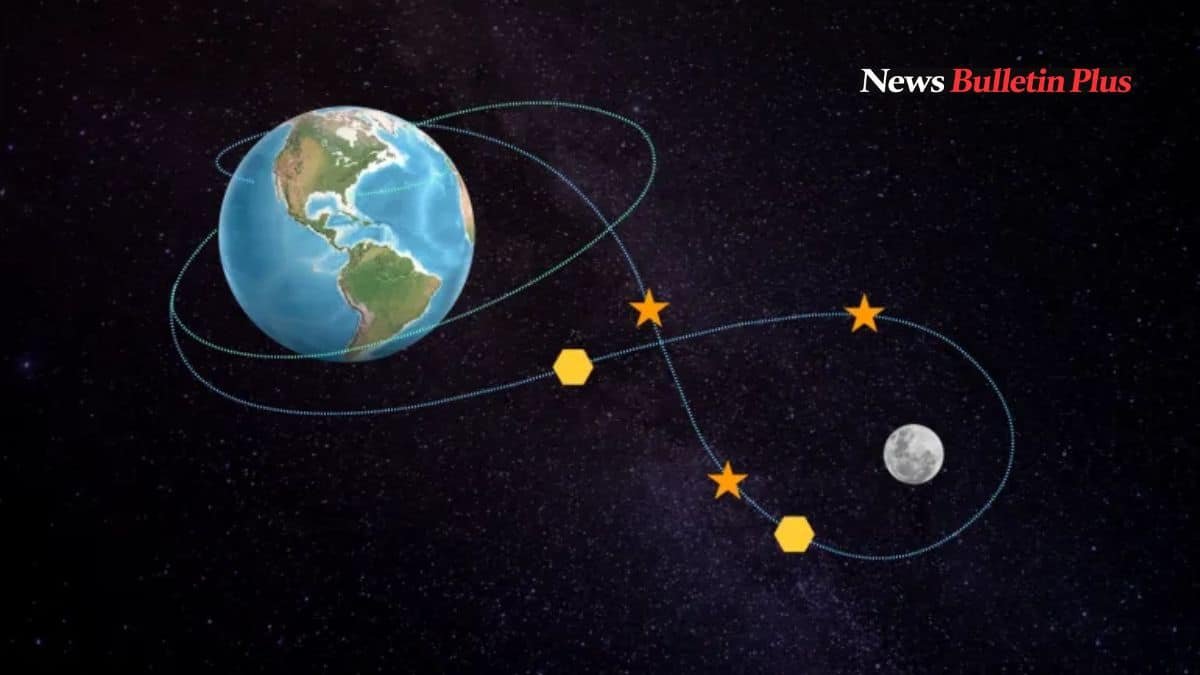
The Artemis II moon mission is shaping up to be one of the most anticipated milestones in modern spaceflight, marking humanity’s first crewed journey around the Moon in more than 50 years. Led by NASA, the mission is expected to launch in 2026 and represents a critical step in the agency’s broader ambitions to return humans to the lunar surface.
Unlike recent robotic missions, Artemis II will carry astronauts beyond low-Earth orbit, reviving a capability last demonstrated during the Apollo era. For many observers, it signals not just a technological leap, but a symbolic return to deep space exploration.
What Happened
NASA has confirmed progress toward the NASA Artemis II launch date, with preparations underway for a crewed test flight using the Artemis II architecture. The mission will send four astronauts aboard the Orion spacecraft on a lunar flyby, traveling thousands of kilometers beyond the Moon before returning to Earth.
The spacecraft will be powered by the massive Space Launch System (SLS), currently the most powerful rocket ever built. NASA officials say final integration and testing phases are progressing, though some delays have pushed the timeline into 2026.
This mission is not designed to land on the Moon. Instead, it will test life-support systems, navigation, and crew safety during deep space travel—an essential step before landing missions resume later in the decade.
Background of the Story
The Artemis program, NASA’s flagship lunar initiative, was launched to re-establish human presence on the Moon. It follows the legacy of the Apollo missions, the last of which took place in 1972.
The Artemis program timeline began with Artemis I in 2022, an uncrewed test flight that successfully orbited the Moon and returned to Earth. Artemis II builds on that success, transitioning from robotic validation to human exploration.
This return to moon mission is not just about revisiting old ground. NASA aims to establish a sustainable presence, including the development of lunar bases and infrastructure that could support future missions to Mars.


Space agencies and private companies worldwide are closely watching. The stakes are high—not just for science, but for geopolitical influence in space.
Reactions and Statements
NASA officials have described Artemis II as a “defining moment” for the agency’s future.
Bill Nelson, NASA Administrator, recently noted that the mission represents “a bold step forward in humanity’s journey beyond Earth,” emphasizing its role in paving the way for long-term exploration.
Engineers involved in the Orion spacecraft mission say the vehicle has undergone extensive upgrades following Artemis I. “We’ve learned a tremendous amount from the first mission,” one senior engineer said. “Now we’re ready to put humans onboard and push further.”
Meanwhile, space analysts say public interest in the mission is growing steadily. “People are fascinated by the idea of humans going back to the Moon,” said a researcher from the Space Policy Institute. “It’s both nostalgic and forward-looking.”
Global or Political Impact
The Artemis II mission is not happening in isolation. It comes amid increasing competition in space exploration, particularly with China advancing its own lunar ambitions.
Experts believe the crewed moon mission NASA is leading could shape the balance of power in space. The United States has already secured partnerships with several countries under the Artemis Accords, a framework for peaceful cooperation in space.
At the same time, private companies such as SpaceX are playing a growing role. Their involvement reflects a shift in how space missions are funded and executed, blending public and commercial capabilities.
From a geopolitical perspective, Artemis II reinforces the idea that space is becoming a key arena for international competition and collaboration.
What Happens Next
Following Artemis II, NASA plans to move quickly toward Artemis III, which aims to land astronauts on the Moon’s south pole—an area believed to contain water ice.
The success of Artemis II will determine the pace of future missions. If the astronauts lunar flyby proceeds as planned, it will validate critical systems needed for longer-duration missions.
Key upcoming steps include:
- Final crew selection and training
- Integrated testing of the Space Launch System rocket
- Simulation of deep space conditions for onboard systems
- Coordination with international partners
NASA has indicated that safety remains the top priority, even if it means adjusting timelines.
Why This News Matters
The Artemis II mission is more than just another spaceflight—it represents a turning point in deep space exploration NASA has been working toward for years.
Here’s why it matters:
- It will be the first human mission beyond low-Earth orbit since Apollo
- It lays the groundwork for sustainable lunar exploration
- It strengthens international partnerships in space
- It inspires a new generation of scientists and engineers
For ordinary people, it’s also a reminder of what humanity can achieve. Watching astronauts travel around the Moon again—something not seen in decades—has a unique emotional pull.
Key Takeaways
- The Artemis II mission is set for a 2026 launch
- It will carry astronauts on a lunar flyby without landing
- The Orion spacecraft and Space Launch System rocket are central to the mission
- It marks a major step in NASA’s plan to return humans to the Moon
- Global competition in space exploration is intensifying
Timeline of Events
- 2022 – Artemis I completes uncrewed lunar test flight
- 2024–2025 – Initial Artemis II schedule faces delays
- 2026 (expected) – Artemis II crewed mission launches
- Late 2020s – Planned lunar landing missions under Artemis III
Expert Analysis
Space policy experts say Artemis II is as much about preparation as it is about demonstration.
“This mission is essentially a stress test for everything NASA wants to do next,” said one analyst. “If it succeeds, it opens the door to long-term human activity on the Moon—and eventually Mars.”
There are also economic implications. According to industry estimates, the global space economy could exceed $1 trillion by 2040, with lunar exploration playing a significant role.
Related Developments
- China is targeting its own crewed lunar missions within the next decade
- Private sector involvement in spaceflight continues to expand
- Advances in reusable rockets are lowering costs
- International cooperation frameworks like the Artemis Accords are growing
Conclusion
As the countdown to 2026 continues, the Artemis II mission stands as a defining chapter in the next era of space exploration. It blends ambition with caution, innovation with legacy.
For NASA, it’s a chance to prove that human exploration beyond Earth is not just possible—but sustainable. For the rest of the world, it’s a moment to watch closely.
Because when astronauts once again circle the Moon, it won’t just be a technical achievement. It will be a signal that humanity is ready to go further than ever before.
Source & Verification
This news topic is also reported by the international news organization Al Jazeera. NASA Prepares for Historic Artemis II Moon Mission Launch in 2026
Risk Reference: