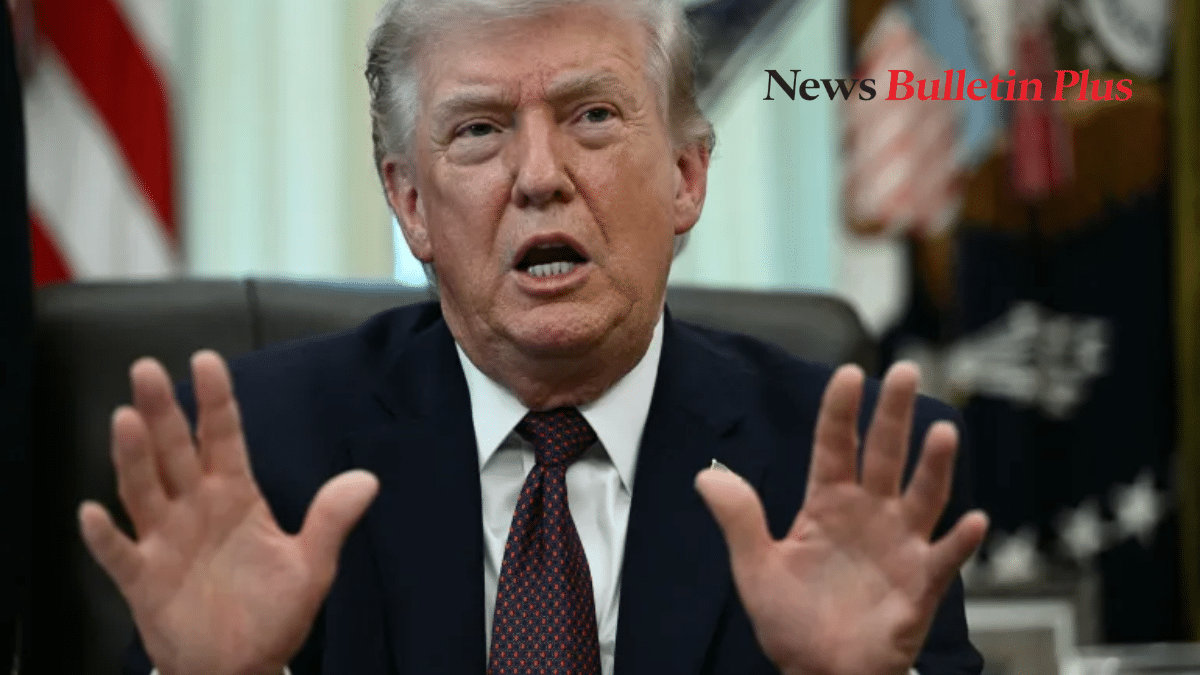
The government of Iran has pushed back strongly against remarks made by former U.S. President Donald Trump, insisting that no request for a ceasefire was ever made. The dispute has added a fresh layer of uncertainty to already fragile regional dynamics, as the Iran denies Trump ceasefire claim narrative quickly gains global attention.
Officials in Tehran described the allegation as a “false and baseless claim,” dismissing suggestions that the Iranian president had reached out to Washington amid escalating tensions.
What Happened
The controversy began after Trump publicly stated that Iran had signaled interest in halting hostilities and seeking a ceasefire. His remarks, widely circulated across media platforms, implied behind-the-scenes communication between Tehran and Washington.
However, within hours, Iran issued a firm rebuttal. The Iran foreign ministry response made it clear: no such request had been made, nor were there any ongoing backchannel efforts tied to a ceasefire proposal.
A spokesperson for Iran’s Foreign Ministry emphasized that the country’s position remains unchanged. “There has been no message, direct or indirect, requesting a ceasefire,” the official said, according to regional media reports.
The sharp denial underscores how sensitive diplomatic messaging has become in the context of ongoing hostilities.
Background of the Story
Tensions between Iran and the United States have been simmering for years, but recent developments have heightened fears of a broader confrontation. The current situation is closely tied to wider Middle East conflict diplomacy, where multiple actors—including regional powers and global stakeholders—are attempting to balance military posturing with political dialogue.
The strategic importance of the Strait of Hormuz has also brought renewed focus to maritime security. Roughly 20% of the world’s oil supply passes through this narrow corridor, making any disruption a global concern.


Historically, both sides have engaged in indirect negotiations during crises. But analysts note that today’s environment is far more volatile, with fewer diplomatic channels functioning effectively.
This is why claims of Iran US war negotiations—even unverified ones—carry significant weight in international discourse.
Reactions and Statements
Iran’s leadership did not mince words. Officials labeled Trump’s comments as misleading and politically motivated. The statement reinforced that Tehran has not initiated any form of ceasefire dialogue.
The response aligns with broader messaging from Iranian authorities, who have repeatedly stressed resistance rather than concession in the face of pressure.
Meanwhile, Trump’s camp has not provided additional evidence to support the claim. This has led to growing skepticism among analysts and policymakers.
Political observers say the Trump Iran ceasefire statement may be aimed at shaping public perception rather than reflecting actual diplomatic developments.
“There’s often a gap between political rhetoric and real negotiations,” said a Middle East analyst at the International Crisis Group. “In this case, Iran’s denial appears consistent with its current strategic posture.”
Global or Political Impact
The fallout from the claim—and its rejection—extends beyond bilateral relations. It affects oil markets, regional alliances, and global security calculations.
Energy traders are particularly sensitive to developments involving the Strait of Hormuz. Even rumors of Strait of Hormuz negotiations can trigger price volatility. According to data from the U.S. Energy Information Administration, disruptions in the region have historically led to sharp spikes in crude oil prices.
Diplomatically, the situation complicates efforts by international actors trying to de-escalate tensions. European mediators, who have previously facilitated talks, now face additional hurdles as trust between parties erodes.
The broader Iran war latest updates suggest that both sides remain entrenched, with little immediate prospect for compromise.
Key Takeaways
- Iran has firmly rejected claims of requesting a ceasefire
- Officials labeled Trump’s remarks as a false and baseless claim
- No evidence has emerged to support the alleged communication
- Regional tensions remain high with limited diplomatic progress
- Global markets are closely watching developments in the Strait of Hormuz
Timeline of Events
- Recent days: Escalation in regional tensions and military rhetoric
- Trump statement: Claims Iran requested ceasefire
- Immediate response: Iran denies the allegation publicly
- Ongoing: Analysts debate implications for diplomacy and security
Expert Analysis
Experts say the situation highlights a recurring pattern in international crises—conflicting narratives shaping global perception.
According to researchers at the Stockholm International Peace Research Institute (SIPRI), misinformation or unverified claims can intensify conflicts by creating confusion around intentions.
In this case, Iran’s swift denial suggests a desire to maintain a firm stance while avoiding any appearance of weakness.
At the same time, the lack of communication channels raises concerns. “Without reliable diplomatic pathways, misunderstandings can escalate quickly,” warned a senior fellow at Chatham House.
Related Developments
- Increased naval presence in the Persian Gulf
- Ongoing sanctions affecting Iran’s economy
- Diplomatic efforts by regional intermediaries
- Heightened security alerts in key shipping lanes
These factors contribute to a complex environment where even minor developments can have outsized consequences.
What Happens Next
For now, there is little indication of imminent talks. Iran continues to project resilience, while U.S. political figures remain divided on how to approach the situation.
Observers believe that any meaningful dialogue would likely require third-party mediation. Countries like Oman and Qatar have historically played such roles, but no confirmed initiatives are currently underway.
The possibility of miscalculation remains a major concern. With both sides holding firm positions, the margin for error is slim.
Why This News Matters
At first glance, this may seem like a dispute over words. But in reality, it reflects deeper issues—trust, communication, and the risk of escalation.
The fact that Iran rejects ceasefire request narratives so strongly indicates how carefully governments manage their public stance during crises. Any perceived shift can have strategic consequences.
For global audiences, the story is a reminder of how quickly tensions in the Middle East can influence everything from fuel prices to international security.
Conclusion
The latest exchange between Iran and Donald Trump underscores the fragile nature of geopolitical communication. While one side claims outreach, the other firmly denies it—leaving the truth somewhere in between, or perhaps absent altogether.
What is clear, however, is that the stakes remain high. As diplomatic uncertainty continues, the world watches closely, aware that even a single statement can ripple across markets, alliances, and conflict zones.
In times like these, clarity matters. And right now, clarity is in short supply.
Source & Verification
This news topic is also reported by the international news organization Al Jazeera. Iran Denies Trump Ceasefire Claim Amid Rising War Tensions
Risk Reference: