West Bank local elections 2026 took centre stage this week as thousands of Palestinians headed to polling stations in a rare exercise of grassroots democracy. The vote, seen by many as both a civic duty and a political signal, comes at a time of deep divisions, economic strain, and ongoing uncertainty across Palestinian territories.
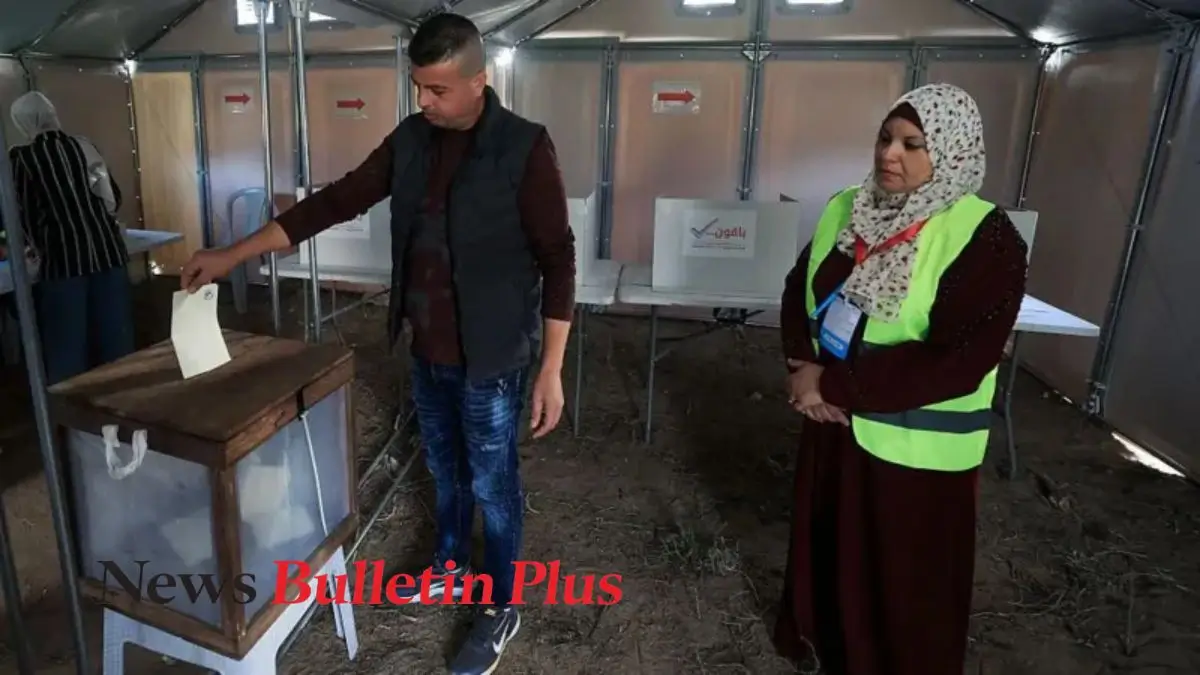
For many voters, this wasn’t just about municipal councils—it was about representation, accountability, and the possibility of change. Streets in several West Bank towns were quieter than usual, punctuated by long lines outside schools and community centres transformed into polling stations.
What Happened
The latest round of West Bank voting unfolded across dozens of municipalities, with residents electing local council members responsible for services like sanitation, infrastructure, and education.
Election officials reported a steady turnout throughout the day, though participation varied by district. In some areas, particularly urban centres, turnout was moderate. In smaller towns, however, community engagement appeared stronger, with families arriving together to cast ballots.
Unlike previous election cycles, political competition in several districts was limited. In some cases, candidates ran unopposed, reflecting both political fatigue and internal fragmentation among factions.
While these were technically Palestinian local elections, they carried broader political weight. Observers say local polls often act as a barometer of public sentiment toward larger governing bodies.
Notably absent from the process were Gaza local elections, which were not held due to the longstanding political split between the West Bank-based Palestinian Authority and Hamas-controlled Gaza. This division continues to shape Palestinian political life and complicates any unified electoral process.
Background of the Story
Local elections in Palestinian territories have historically been irregular. The last comprehensive rounds were held in phases over recent years, often delayed due to political disagreements and security concerns.


The split between Fatah, which governs parts of the West Bank, and Hamas, which controls Gaza, has prevented national elections since 2006. Attempts to organize unified Palestinians vote elections at the national level have repeatedly stalled.
Municipal elections, therefore, have taken on added importance. They provide one of the few opportunities for public participation in governance, even if their scope is limited to local issues.
According to data from the Palestinian Central Elections Commission, more than 400 local councils exist across the West Bank. However, not all participated in this round due to administrative or political constraints.
Analysts at the International Crisis Group have previously noted that local elections in the region often reflect clan dynamics and local alliances rather than purely ideological competition. In many communities, family ties and service delivery track records matter more than party platforms.
Reactions and Statements
Officials from the Palestinian Authority described the elections as a “necessary democratic process,” emphasizing their role in strengthening local governance.
“We want to ensure that citizens have a voice in managing their daily affairs,” one election official said during a press briefing in Ramallah.
However, reactions on the ground were mixed.
Some voters expressed cautious optimism. “Even if it’s just local, at least we can choose who represents us here,” said a voter in Nablus. “It’s better than nothing.”
Others were more skeptical. “Without national elections, this feels incomplete,” said a university student in Hebron. “We need bigger change, not just local councils.”
Independent observers reported that the voting process was largely orderly, though they pointed out limited competition in certain districts as a concern.
Human rights groups also stressed the importance of broader political reforms. According to a report by Human Rights Watch, sustained democratic legitimacy in Palestinian governance requires regular, inclusive elections at all levels.
Global or Political Impact
While municipal in nature, the elections are being closely watched by regional and international stakeholders.
The European Union, which has supported electoral processes in Palestinian territories in the past, reiterated the importance of democratic participation. A spokesperson noted that “local elections are a key step in building accountable institutions.”
From a geopolitical standpoint, the absence of Gaza local elections once again highlights the enduring political divide. This split not only weakens internal governance but also complicates international diplomatic efforts.
Political analysts say the elections may also influence future negotiations with Israel and broader Middle East diplomacy. Local governance stability is often seen as a prerequisite for any meaningful political progress.
Moreover, turnout levels and candidate success rates could offer insights into public confidence in existing leadership structures.
What Happens Next
Once results are finalized, newly elected councils will begin their terms, focusing on local service delivery and community needs.
Key challenges await them.
Municipalities across the West Bank face financial constraints, aging infrastructure, and growing population pressures. In many areas, access to resources is limited by broader political and economic conditions.
Experts suggest that the effectiveness of these councils will depend not only on leadership but also on coordination with the Palestinian Authority and international donors.
There are also questions about whether these elections could pave the way for broader political processes.
“Local elections can build momentum,” says a Middle East political analyst. “But without a clear path to national elections, their impact remains limited.”
Why This News Matters
At first glance, local elections might seem routine. But in the Palestinian context, they carry deeper meaning.
They represent one of the few functioning democratic mechanisms available to citizens. In the absence of national elections, they become a rare outlet for political expression.
The West Bank local elections also reflect the realities of governance under occupation and internal division. They highlight both the resilience of local communities and the challenges they face.
For the international community, these elections offer a snapshot of public sentiment and institutional capacity. For Palestinians, they are a reminder of both participation and limitation.
Key Takeaways
- Voters across the West Bank participated in municipal elections amid political divisions.
- The elections excluded Gaza, underscoring ongoing internal fragmentation.
- Turnout varied, with stronger participation in smaller communities.
- Analysts say local elections serve as a measure of public sentiment.
- Calls for broader national elections continue to grow.
Timeline of Events
- 2006: Last Palestinian national elections held.
- 2010s–2020s: Multiple attempts at reconciliation and elections fail.
- Recent Years: Phased municipal elections conducted intermittently.
- 2026: Latest round of West Bank municipal voting takes place.
Expert Analysis
Political observers argue that while these elections are important, they cannot replace national-level democratic processes.
According to a report by the United Nations Development Programme, strong local governance is essential for stability, but it must be paired with inclusive national institutions.
“People want accountability,” one regional expert noted. “Local councils can deliver services, but they can’t address the broader political questions.”
Related Developments
- Ongoing reconciliation talks between Fatah and Hamas remain stalled.
- International donors continue to fund local governance initiatives.
- Calls for renewed national elections are gaining traction among civil society groups.
Conclusion
The latest round of West Bank local elections offers a glimpse into the complex political landscape of Palestinian territories. While they provide an avenue for civic participation, they also underscore the limitations imposed by division and uncertainty.
For many Palestinians, the act of voting is both hopeful and frustrating—a sign of democratic intent in a system that remains incomplete.
Whether these elections lead to broader political change remains to be seen. But for now, they stand as a reminder that even in difficult circumstances, the desire for representation and voice endures.
Source & Verification
This news topic is also reported by the international news organization BBC.
Risk Reference:
https://www.bbc.com/news/articles/cn4vej3x0wxo