US-Iran Ceasefire: The fragile US-Iran Ceasefire remains in place, even as tensions simmer dangerously around the Strait of Hormuz, one of the world’s most critical oil routes. Despite recent military posturing and sharp rhetoric, officials on both sides insist the agreement is still holding—for now.
The situation, however, is far from stable. With naval movements increasing and global markets watching closely, analysts warn that even a minor miscalculation could quickly escalate into a broader conflict.
US-Iran Ceasefire: What Happened
In recent days, the United States and Iran have maintained their ceasefire agreement despite a tense standoff near the Strait of Hormuz. Reports indicate that naval forces from both countries have been operating in close proximity, raising concerns about the risk of confrontation.
According to statements from US defense officials, American forces have continued routine patrols in international waters. Meanwhile, Iranian military units have also stepped up their presence in the region, signaling readiness but stopping short of direct engagement.
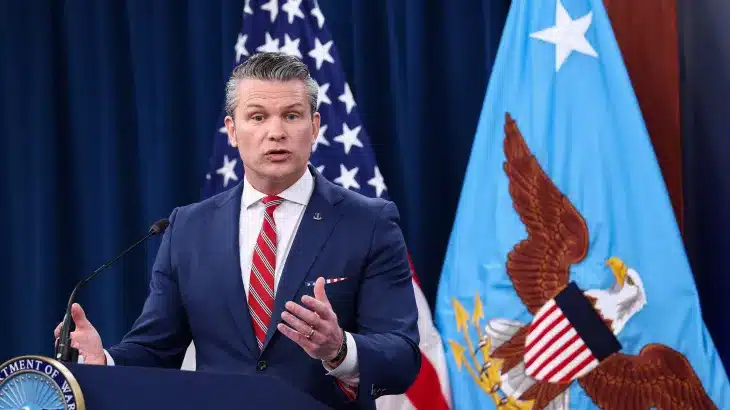
US Defense Secretary Pete Hegseth noted that while the ceasefire remains intact, the situation is “fluid” and requires constant monitoring. He emphasized that the US is committed to ensuring freedom of navigation in the Hormuz corridor, a route that handles nearly 20% of the world’s oil supply.
Background of the Story
The US Iran Ceasefire came after weeks of heightened tensions that saw both sides exchange threats and conduct limited strikes. The agreement was widely viewed as a necessary step to prevent a full-scale conflict in the Middle East.
The Strait of Hormuz has long been a flashpoint in US-Iran relations. Its strategic importance cannot be overstated. Any disruption in this narrow waterway can have immediate consequences for global energy prices and supply chains.
Historically, Iran has threatened to block the strait during periods of conflict, while the United States has consistently vowed to keep it open. This ongoing tug-of-war has made the region one of the most volatile geopolitical hotspots in the world.


Reactions and Statements
Officials from both countries have struck a cautious tone.
US military leaders have reiterated their commitment to de-escalation but warned that they are prepared to respond if provoked. “We are not seeking conflict,” one senior official said, “but we will defend our interests and our allies.”
On the Iranian side, government representatives have accused the US of “provocative actions” in the region but stopped short of threatening immediate retaliation. Iranian state media has framed the situation as a test of sovereignty and regional influence.
International organizations and global leaders have also weighed in. The United Nations has called for restraint, urging both nations to avoid actions that could undermine the ceasefire. European diplomats, meanwhile, have quietly engaged in backchannel discussions to help maintain stability.
Global or Political Impact
The ongoing standoff has already had ripple effects across global markets. Oil prices have shown signs of volatility, reacting to each new development in the region.
Energy analysts note that even the perception of risk in the Strait of Hormuz can drive prices upward. According to data from the International Energy Agency, disruptions in this corridor could impact millions of barrels of oil per day.
Politically, the situation places pressure on US allies in the Gulf, many of whom rely heavily on stable shipping routes. Countries like Saudi Arabia and the UAE are closely monitoring developments, aware that any escalation could directly affect their economies.
For Iran, the standoff is also about projecting strength. Domestic audiences expect firm resistance to US presence in the region, adding another layer of complexity to diplomatic efforts.
What Happens Next
The immediate future of the US Iran Ceasefire depends on restraint from both sides. Military experts suggest that clear communication channels will be crucial in preventing accidental clashes.
There are ongoing diplomatic efforts behind the scenes. Sources indicate that regional mediators are working to reduce tensions and establish guidelines for naval operations in the area.
However, the risk remains high. A single incident—such as a misinterpreted maneuver or an unexpected encounter—could unravel the fragile calm.
Why This News Matters
This is not just a regional issue. The stability of the Strait of Hormuz affects the entire global economy.
From fuel prices to supply chains, the consequences of any disruption would be felt worldwide. For everyday consumers, it could mean higher costs. For governments, it could trigger economic and political challenges.
More importantly, the situation highlights how quickly geopolitical tensions can escalate, even when a ceasefire is in place. It serves as a reminder that peace agreements, while crucial, are often only the first step toward long-term stability.
Key Takeaways
- The US Iran Ceasefire is still holding despite rising tensions
- Naval activity near the Strait of Hormuz remains high
- Global oil markets are reacting to uncertainty
- Diplomatic efforts are ongoing to prevent escalation
- The situation remains volatile and unpredictable
Timeline of Events
- Recent Weeks: Escalation between US and Iran leads to limited military actions
- Ceasefire Agreement: Both sides agree to halt hostilities
- Current Situation: Naval standoff emerges near Strait of Hormuz
- Ongoing: Diplomatic efforts continue to maintain stability
Expert Analysis
Security experts say the current situation reflects a “controlled tension” phase. According to analysts at the International Crisis Group, both sides appear to be testing limits without crossing into open conflict.
“This is a classic case of strategic signaling,” one analyst explained. “Neither side wants war, but neither wants to appear weak.”
Energy economists also point out that markets are highly sensitive to developments in the region. Even minor incidents can trigger significant price swings, underscoring the global importance of stability in the Gulf.
Related Developments
- Increased US naval deployments in the Gulf region
- Iran conducting military exercises near key shipping lanes
- Ongoing diplomatic engagement involving European and regional actors
Conclusion
The US Iran Ceasefire may be holding, but the tension beneath the surface is hard to ignore. The standoff in the Strait of Hormuz is a stark reminder that peace in geopolitics is often fragile and temporary.
For now, both sides appear committed to avoiding escalation. But with so much at stake—economically, politically, and militarily—the world will be watching closely to see what happens next.
Source & Verification
This news topic is also reported by the international news organization Al Jazeera. US-Iran Ceasefire Holds Despite Hormuz Standoff and Rising Tensions
Risk Reference: