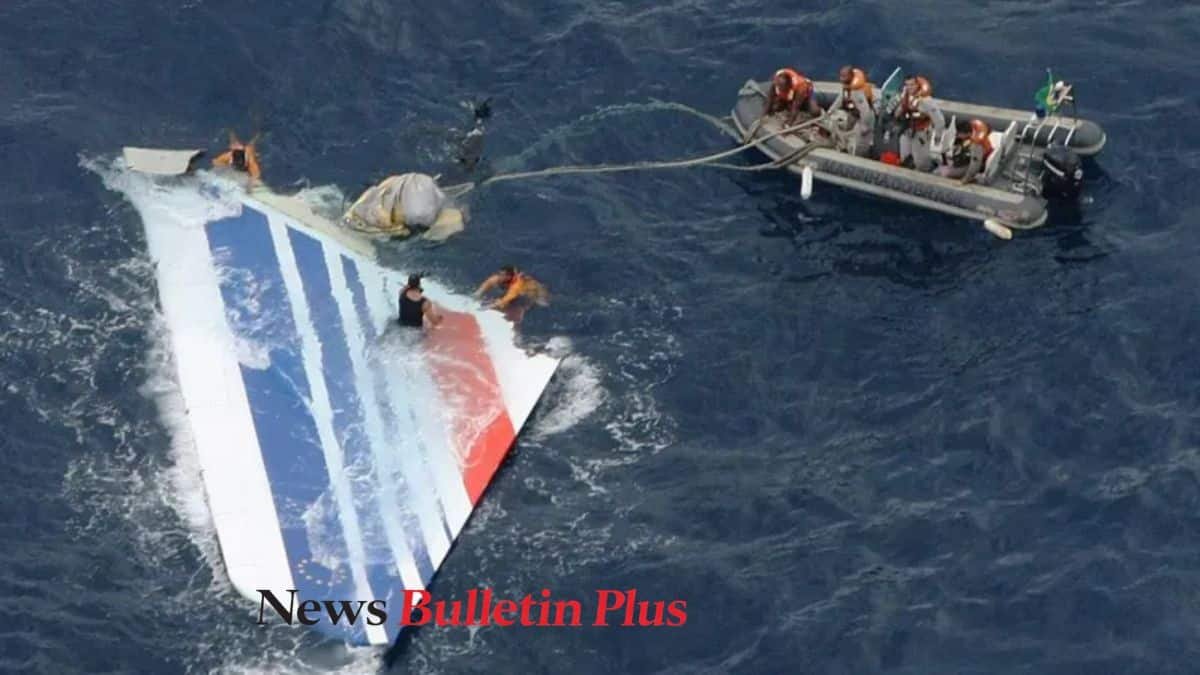
The long-running legal battle over the tragic Air France plane crash of 2009 has taken a dramatic turn after a French appeals court found both Air France and Airbus guilty of manslaughter. The ruling comes nearly 17 years after Air France Flight 447 disappeared over the Atlantic Ocean while traveling from Rio de Janeiro to Paris, killing all 228 people on board.
The decision has reignited debate over airline accountability, pilot training, and aircraft technology failures in one of the deadliest aviation disasters in recent history. Families of victims described the judgment as a significant moment after years of legal proceedings and unanswered questions.
What Happened in the Airbus Manslaughter Case
The Paris Court of Appeal ruled that both the airline and aircraft manufacturer shared responsibility for the disaster involving Air France Flight 447. Judges concluded that mistakes linked to pilot response and aircraft system issues contributed to the fatal crash.
Flight 447 vanished on June 1, 2009, during a nighttime journey from Brazil to France. Investigators later discovered the Airbus A330 aircraft had entered a high-altitude stall after ice crystals blocked speed sensors known as pitot tubes.
According to investigators, the blocked sensors caused conflicting speed readings inside the cockpit. Pilots struggled to react properly as the aircraft lost altitude and eventually plunged into the Atlantic Ocean.
The court said Airbus failed to provide adequate information about known risks connected to pitot tube malfunctions, while Air France was criticized for insufficient pilot training related to high-altitude stalls.
The Airbus manslaughter case has become one of the most closely watched legal proceedings in modern aviation history because it raised difficult questions about how responsibility should be shared between airlines and aircraft manufacturers.
Timeline of the 2009 Plane Crash Investigation
June 1, 2009
Air France Flight 447 disappears over the Atlantic with 228 passengers and crew aboard.


2009–2011
Large-scale search operations recover debris and flight recorders from the ocean floor.
2012
French investigators release findings showing pilot confusion and technical sensor failures contributed to the accident.
2022
A lower French court acquits both Air France and Airbus of involuntary manslaughter charges.
2026
An appeals court overturns parts of the earlier ruling and issues a new Air France guilty verdict against both companies.
Background of the Story
The crash shocked the aviation industry because the Airbus A330 was considered one of the safest long-haul aircraft in service at the time. The disaster also exposed weaknesses in cockpit communication and pilot handling during emergency situations.
French aviation investigators from BEA, the country’s air accident authority, concluded years ago that the aircraft remained technically flyable for much of the emergency. However, confusion inside the cockpit led to incorrect control inputs that caused the plane to stall.
The tragedy triggered major changes across the aviation sector. Airlines around the world updated pilot training programs, especially for high-altitude stall recovery procedures. Airbus also redesigned certain pitot tubes after earlier reports had already linked them to speed-reading problems in severe weather conditions.
Aviation analysts say the plane crash investigation became a case study taught in flight schools globally because it demonstrated how small technical failures can quickly escalate when crews are overwhelmed under pressure.
Reactions and Statements
Families of victims welcomed the ruling, though many said the decision came painfully late.
Several relatives gathered outside the Paris courthouse after the judgment was delivered. Some carried photographs of loved ones lost in the crash.
“This ruling recognizes that serious mistakes were made,” one victims’ association representative told French media. “For years, families felt ignored.”
Air France stated it respected the court’s decision but maintained that the accident resulted from a complex chain of events. Airbus also acknowledged the tragedy while defending the safety record of the A330 fleet.
Legal experts noted that proving criminal liability in aviation disasters is often difficult because crashes usually involve multiple technical and human factors rather than one single mistake.
Still, the Airbus court ruling could influence future cases involving airline responsibility and aircraft manufacturing standards.
Expert Analysis on Airline Safety Controversy
The case has revived a wider airline safety controversy surrounding automation in modern aircraft.
Aviation specialists say pilots today rely heavily on automated systems, but emergencies can become dangerous when those systems suddenly fail or provide conflicting information.
Former commercial pilot and aviation consultant Jean-Luc Mercier said the Flight 447 disaster changed how the industry approaches cockpit training.
“Before this crash, many pilots had little real-world experience handling manual high-altitude stalls,” he explained. “The industry realized that technology alone cannot replace fundamental flying skills.”
Data from the International Air Transport Association shows commercial aviation has become significantly safer over the past two decades. However, experts argue that rare accidents like Flight 447 still expose critical vulnerabilities in pilot training and emergency procedures.
The crash also influenced international aviation regulations. Airlines introduced more simulator exercises involving unreliable speed readings and severe weather scenarios.
Global Impact of the Aviation Accident News
The latest aviation accident news has drawn international attention because victims came from more than 30 countries, including Brazil, France, Germany, China, and the United Kingdom.
The ruling may also affect future legal claims involving multinational airlines and aircraft manufacturers. Analysts say courts are increasingly willing to examine corporate accountability in transportation disasters.
In France, the decision reopened public discussion about aviation oversight and passenger safety standards. Meanwhile, Brazilian media revisited emotional stories from families who spent years seeking justice after losing relatives in the crash.
The case has also become symbolic of how long aviation investigations can take. Recovery operations alone lasted nearly two years due to the extreme depth of the Atlantic Ocean where the aircraft wreckage was located.
What Happens Next
Lawyers representing Air France and Airbus may still pursue further legal options, including appeals to higher courts.https://www.bbc.com/news/articles/czd2qmdvmq6o The companies could also face renewed civil compensation discussions with victims’ families.
Industry observers say the ruling is unlikely to cause operational changes for Airbus aircraft immediately because safety procedures introduced after the crash are already widely implemented across global airlines.
Still, the judgment may shape future corporate liability cases involving aircraft manufacturers and airline operators.
Key Takeaways
- Both Air France and Airbus were found guilty of manslaughter over the 2009 disaster.
- The crash of Flight 447 killed 228 people traveling from Rio de Janeiro to Paris.
- Investigators blamed a combination of technical failures and pilot confusion.
- The ruling overturns earlier acquittals issued by a lower French court.
- The case transformed pilot training and aviation safety procedures worldwide.
Why This News Matters
The ruling closes another chapter in one of the world’s most haunting aviation tragedies, but it also raises lasting questions about technology, accountability, and passenger safety.
For families of the victims, the court decision represents recognition that errors occurred at multiple levels. For the aviation industry, the case remains a warning about how quickly disasters can unfold when technical malfunctions and human reactions collide in the air.
The story of the 2009 plane crash continues to shape aviation policy years later, reminding airlines and manufacturers that public trust depends not only on innovation, but also on transparency and responsibility when things go wrong.
Source & Verification
This news topic is also reported by the international news organization Al Jazeera. Sinaloa Governor Resigns Amid US Allegations of Cartel Links
Risk Reference: https://www.bbc.com/news/articles/czd2qmdvmq6o