Key Takeaways
- Russia behind arson attacks targeting PM Investigations have linked a series of arson attacks on properties connected to UK Prime Minister Keir Starmer to a Russia-based network.
- Two men were found guilty over attacks targeting locations associated with the British leader.
- Evidence presented in court pointed to a Russian-speaking handler known as “El Money,” who allegedly coordinated the operation through Telegram.
- Security experts say the case reflects broader concerns about foreign-backed sabotage and influence operations across Europe.
- British authorities are continuing efforts to identify those responsible for directing the attacks.
Russia Behind Arson Attacks Targeting UK Prime Minister as New Evidence Emerges
Fresh findings from a major investigation have intensified concerns about foreign interference in the United Kingdom after evidence suggested that Russia behind arson attacks targeting PM was more than a theory.
- Key Takeaways
- Russia Behind Arson Attacks Targeting UK Prime Minister as New Evidence Emerges
- What Happened?
- BBC Reveals Russia Role in Arson Attacks
- Background of the Story
- Reactions and Statements
- Expert Analysis: Russia Sabotage Campaign UK
- Global and Political Impact
- Related Developments
- What Happens Next?
- Why This News Matters
- Source & Verification
According to reports and court proceedings, a series of fires targeting properties linked to Prime Minister Keir Starmer were allegedly directed by a Russian-speaking handler operating through encrypted messaging platforms. The revelations have renewed debate about security threats facing political leaders and the growing challenge of hybrid warfare in Europe.
The investigation comes after months of scrutiny into what initially appeared to be isolated criminal acts. Authorities now believe the attacks formed part of a wider campaign designed to spread fear, create instability, and undermine public confidence in British institutions.
What Happened?
The incidents took place in North London and involved multiple locations connected to Starmer.
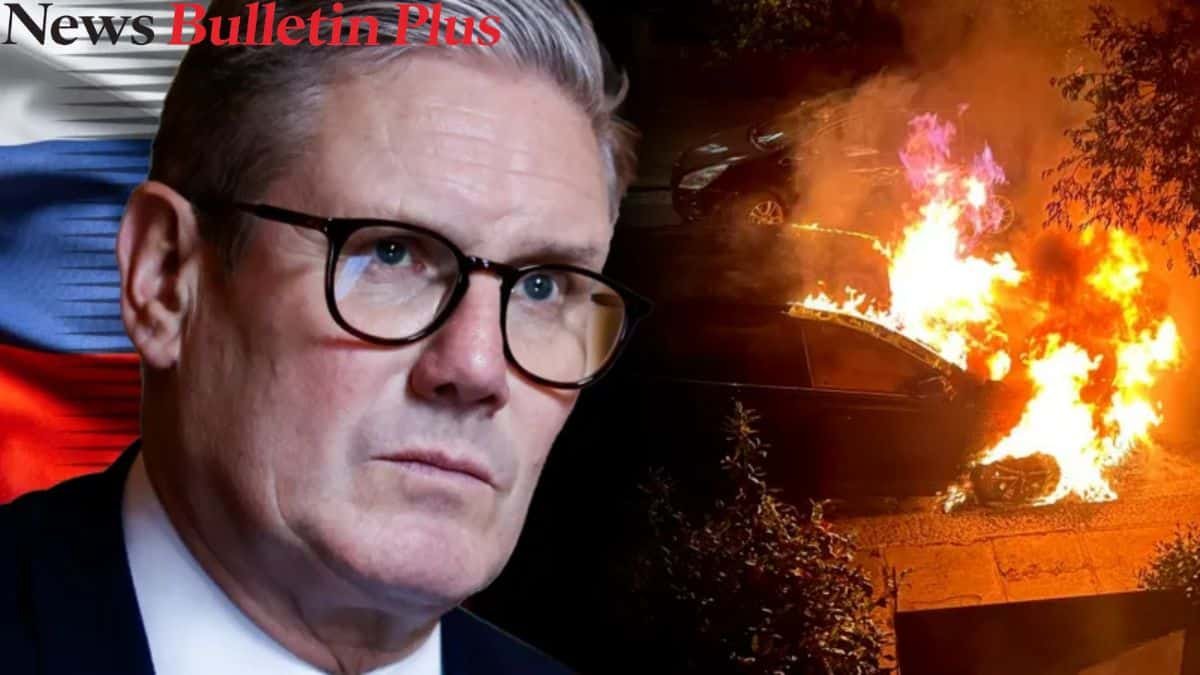
Among the targets were a vehicle previously owned by the prime minister and properties associated with him. One of the affected homes was occupied by a relative at the time of the attack, raising concerns about the potential danger to residents. Prosecutors argued that the coordinated nature of the fires made it clear the locations were deliberately selected.
A court later heard that a Russian-speaking figure using the alias “El Money” allegedly recruited individuals through Telegram and offered cryptocurrency payments in exchange for carrying out the attacks. Investigators recovered hundreds of messages that reportedly detailed planning, instructions, and discussions surrounding the operation.
The case gained further attention after two men were convicted of conspiracy-related offenses connected to the fires. Prosecutors described the attacks as organized rather than random criminal acts.
BBC Reveals Russia Role in Arson Attacks
One of the most significant developments came after reports indicating that BBC reveals Russia role in arson attacks through an extensive investigation into the network behind the incidents.


The broadcaster reportedly uncovered evidence suggesting that the operation formed part of a broader sabotage effort extending beyond the fires themselves. Investigators traced links between the individuals involved and networks believed to be operating from Russia, with online messaging channels playing a central role in recruitment and coordination.
The findings have added weight to long-standing concerns among British security officials that foreign actors are increasingly using criminal proxies, online platforms, and disinformation campaigns to carry out disruptive activities while maintaining plausible deniability.
Background of the Story
The Keir Starmer arson attack investigation did not emerge in isolation.
For several years, Western intelligence agencies have warned that Russia and affiliated actors have expanded efforts to conduct influence operations, cyber campaigns, and acts of sabotage across Europe. Analysts often describe these tactics as part of a broader strategy aimed at creating uncertainty and weakening trust in democratic institutions.
Officials and security experts have noted similarities between the Starmer-linked incidents and other cases in which individuals were recruited remotely through social media and messaging applications. In many instances, those carrying out the acts allegedly had limited understanding of the broader political objectives behind them.
The latest allegations have therefore been viewed not simply as a criminal investigation but as a potential national security issue.
Timeline of Events
- September 2024: Communications allegedly begin between suspects and the handler known as “El Money.”
- May 2025: Fires target a vehicle and properties connected to Starmer.
- May 2025: Arrests are made following the attacks.
- 2026 Trial Proceedings: Evidence involving Telegram messages and cryptocurrency payments is presented in court.
- June 2026: Two men are convicted, while investigators continue examining links to a broader Russian network.
Reactions and Statements
British authorities have been cautious in their public comments, emphasizing that criminal convictions were based on evidence presented in court while broader investigations continue.
Counterterrorism officials have argued that the objective of the attacks appeared to be the creation of fear and public disruption rather than a direct ideological campaign by the individuals carrying them out.
Meanwhile, Russia has previously denied involvement in allegations linking it to attacks on Starmer-associated properties. Moscow has rejected suggestions that it directed or supported the incidents.
Security analysts say determining direct state responsibility in cases involving proxy actors is often difficult, particularly when communication occurs through encrypted online channels.
Expert Analysis: Russia Sabotage Campaign UK
Experts monitoring European security trends argue that the alleged operation fits a pattern increasingly associated with a Russia sabotage campaign UK and elsewhere across the continent.
Former intelligence and defense specialists have repeatedly warned that modern sabotage campaigns rarely resemble traditional espionage operations. Instead, they frequently involve intermediaries, online recruitment, cryptocurrency payments, and information warfare.
The alleged use of Telegram, remote handlers, and financial incentives reflects methods that investigators have identified in other suspected Russian influence efforts. Analysts say such operations are designed to generate political pressure while making attribution more complicated.
The emergence of a suspected Russian sabotage network operating through digital channels has therefore attracted significant attention among security agencies.
Global and Political Impact
The case has implications beyond Britain.
European governments have become increasingly concerned about Russia-linked attacks in Britain and other countries amid ongoing geopolitical tensions. Security agencies across NATO member states have reported rising concerns about sabotage, cyberattacks, and coordinated disinformation campaigns.
For the UK government, the incidents have also highlighted the issue of a growing UK Prime Minister security threat environment. While leaders have long faced risks from domestic extremists and lone actors, intelligence officials are now paying greater attention to foreign-directed activities carried out through intermediaries.
Political observers note that attacks targeting prominent public figures can have effects far beyond physical damage, influencing public confidence and national security discussions.
Related Developments
Investigators examining the Russia Behind Arson Attacks have reportedly explored links between the suspects and wider online activities that included propaganda distribution and provocative messaging campaigns.
Reports indicate that some of these efforts may have been designed to inflame social tensions and amplify division within British society. Security experts say this approach mirrors tactics increasingly associated with modern influence operations.
What Happens Next?
The convictions mark an important stage in the investigation, but significant questions remain unanswered.
Authorities continue efforts to identify the individuals who directed the attacks and to determine the extent of any broader organizational involvement. Investigators are also examining whether additional networks or operatives may have been connected to the operation.
Further findings could influence future British responses to foreign interference and shape wider European security policy discussions.
Why This News Matters
The story extends beyond a criminal court case. It touches on national security, political stability, and the evolving nature of international confrontation.
The allegations surrounding a Russia-linked operation targeting properties connected to the British prime minister underscore how modern conflicts increasingly unfold away from traditional battlefields. Digital platforms, proxy actors, and covert influence campaigns have become central tools in geopolitical competition.
As investigators continue to uncover details, the case is likely to remain a key example of how governments are confronting emerging security challenges in an increasingly interconnected world.
Conclusion
Evidence presented in court and findings from recent investigations have strengthened claims that actors connected to a Russia-based network played a role in organizing arson attacks targeting properties associated with Prime Minister Keir Starmer. While questions remain about the full chain of responsibility, the case has intensified concerns about foreign-backed sabotage operations and political security in Britain. As authorities pursue those believed to have orchestrated the attacks, the incident is expected to remain a significant focus of both national security discussions and international relations.
Source & Verification
This news topic is also reported by the international news organization BBC. Russia Behind Arson Attacks Targetcing UK Prime Minister, Investigation Finds.
Risk Reference:
https://www.bbc.com/news/articles/c8r2l352z2do