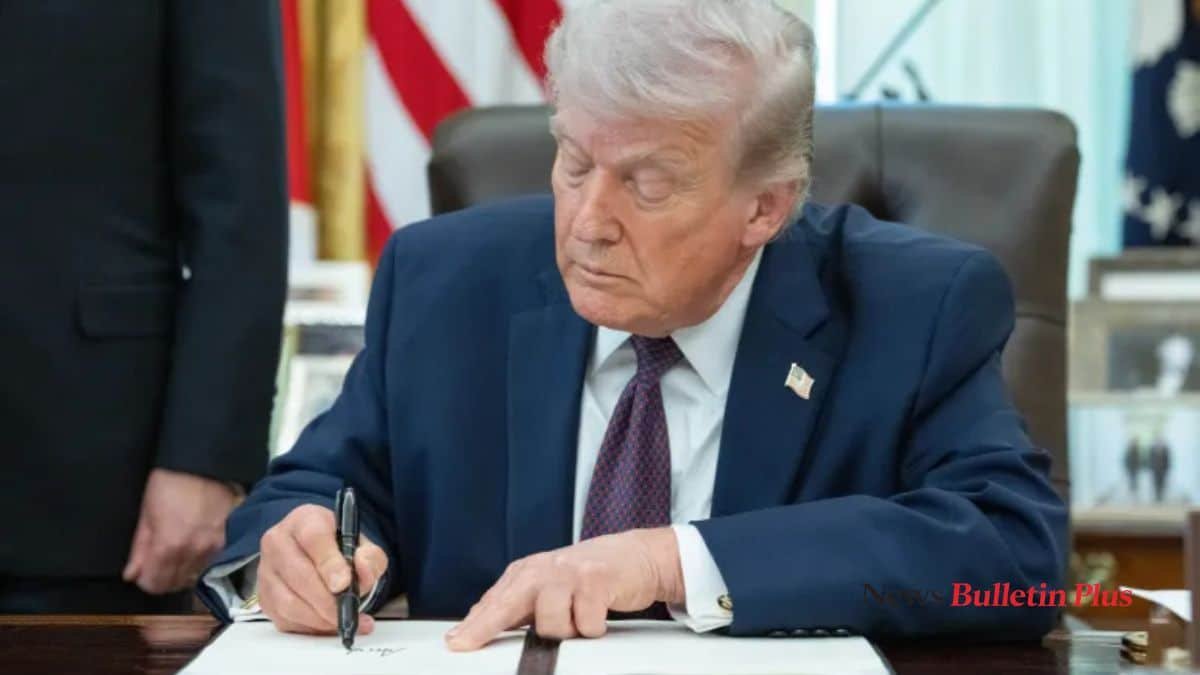
Trump Over Mail In Ballot Limits: A coalition of Democrat-led states has launched a legal challenge against former President Donald Trump, targeting new Trump mail ballot limits that critics say could restrict access to voting ahead of future elections.
The lawsuit, filed by more than 20 states, marks one of the most significant US election law challenge cases in recent years. At its core is a dispute over how far federal authority can go in shaping election rules traditionally managed at the state level.
What Happened
Attorneys general from over two dozen states have filed a Democrat states lawsuit contesting new federal measures that seek to impose stricter controls on mail-in ballots.
The legal complaint argues that the proposed mail-in voting restrictions could make it harder for millions of Americans to cast ballots, particularly those who rely on postal voting due to distance, disability, or work constraints.
State officials claim the rules would limit when ballots can be sent and received, potentially disqualifying votes that arrive after Election Day—even if they were mailed on time.
“This is a direct challenge to how states run their own elections,” one attorney general said in a statement reported by international media. “We believe these rules undermine access and violate established law.”
The case is shaping up as a high-stakes voting rights lawsuit, with implications that could extend well beyond a single election cycle.
Background of the Story
Mail-in voting has been a contentious issue in US politics, particularly since the 2020 election, when record numbers of voters used absentee ballots during the COVID-19 pandemic.


Former President Trump has repeatedly criticized mail-in voting systems, arguing—without substantial evidence—that they are vulnerable to fraud. His allies have pushed for tighter controls, framing them as necessary safeguards for election integrity.
The current Trump election policy reflects those long-standing concerns. However, critics say the measures disproportionately affect certain groups, including rural voters, elderly citizens, and minorities.
The dispute also ties into a broader voter suppression debate that has intensified over the past decade. According to data from the Brennan Center for Justice, several states have introduced laws that voting rights advocates argue could restrict access to the ballot box.
At the heart of the case is a fundamental question: who gets to decide how elections are run—the federal government or individual states?
Reactions and Statements
The lawsuit has drawn sharp reactions from both sides of the political spectrum.
Supporters of the restrictions argue that consistent national standards are necessary to prevent confusion and ensure election security. “Uniform rules help build trust in the system,” said a policy analyst aligned with conservative legal groups.
Opponents, however, see the move as an overreach. Civil rights organizations warn that limiting mail-in voting could discourage participation, especially among communities that already face barriers to voting.
“Mail-in ballots are not a loophole—they are a lifeline,” said a representative from a US-based voting rights group. “For many Americans, this is the only practical way to vote.”
Legal experts note that courts have historically given states broad authority over election procedures, making this case a significant test of federal vs state election power.
Global or Political Impact
Although the case is rooted in US law, its implications are being closely watched internationally.
Democratic systems around the world often grapple with similar questions about election access and integrity. Analysts say the outcome of this dispute could influence how other countries approach absentee voting and electoral oversight.
Within the United States, the case could reshape the balance of power between federal and state governments. If federal rules are upheld, it may open the door to more centralized control over elections.
Conversely, a ruling in favor of the states could reinforce their autonomy and limit federal intervention in election processes.
Political analysts say the case is likely to become a flashpoint in the run-up to future elections. “This isn’t just a legal issue—it’s a political one,” said a Washington-based expert. “The stakes are incredibly high.”
Key Takeaways
- More than 20 states have filed a lawsuit challenging new mail-in ballot rules.
- The case centers on whether federal authorities can impose restrictions on state-run elections.
- Critics argue the measures could limit voter access, while supporters cite election security concerns.
- The outcome could redefine election governance in the United States.
Timeline of Events
- 2020 – Mail-in voting expands significantly during the pandemic.
- 2021–2024 – Ongoing debates and state-level changes to voting laws.
- 2025 – New federal proposals introduce stricter ballot handling rules.
- 2026 – Democrat-led states file lawsuit challenging the measures.
Expert Analysis
Legal scholars say the case hinges on constitutional interpretation, particularly the Elections Clause, which outlines the roles of state legislatures and Congress in regulating elections.
“Historically, states have had primary responsibility,” said a constitutional law professor. “But Congress does have the authority to set certain standards. The question is where that line is drawn.”
Research from the Pew Research Center indicates that public opinion on mail-in voting remains divided, often along political lines. While many voters see it as convenient and safe, others remain skeptical about its security.
Experts also point out that changes to voting systems can have real-world consequences. Even small procedural shifts—such as deadlines or identification requirements—can influence turnout.
Related Developments
The lawsuit comes amid a broader wave of legal battles over voting laws across the United States.
In recent years, courts have reviewed cases involving voter ID requirements, redistricting, and ballot access. Each decision has contributed to an evolving legal landscape that continues to shape how Americans vote.
Meanwhile, advocacy groups on both sides are mobilizing resources, anticipating a prolonged court fight that could reach the US Supreme Court.
What Happens Next
The case will proceed through the federal court system, where judges will evaluate whether the new rules violate constitutional protections or federal statutes.
Legal observers expect initial rulings in lower courts, followed by appeals that could take months—or even years—to resolve.
If the case reaches the Supreme Court, it could result in a landmark decision defining the boundaries of election authority in the United States.
For now, states involved in the lawsuit are seeking to block the implementation of the rules while the case is being heard.
Why This News Matters
Elections are the foundation of any democracy. How they are conducted—and who gets to participate—can shape the direction of a nation.
This case raises critical questions about access, fairness, and trust in the electoral process. For voters, it’s not just a legal debate; it’s about whether their voices will be heard.
The outcome could also set a precedent for future policies, influencing how elections are managed for years to come.
Conclusion
The legal battle over mail-in ballot limits has opened a new chapter in America’s ongoing debate over voting rights and election security.
As courts weigh the arguments, the stakes are clear. A decision in this case could redefine the balance between federal authority and state control, while also affecting how millions of Americans cast their votes.
For now, the issue remains unresolved—but its impact is already being felt across the political landscape.
Source & Verification
This news topic is also reported by the international news organization Al Jazeera. Democrat-Led States Sue Trump Over Mail-In Ballot Limits in Major Election Law Clash
Risk Reference: