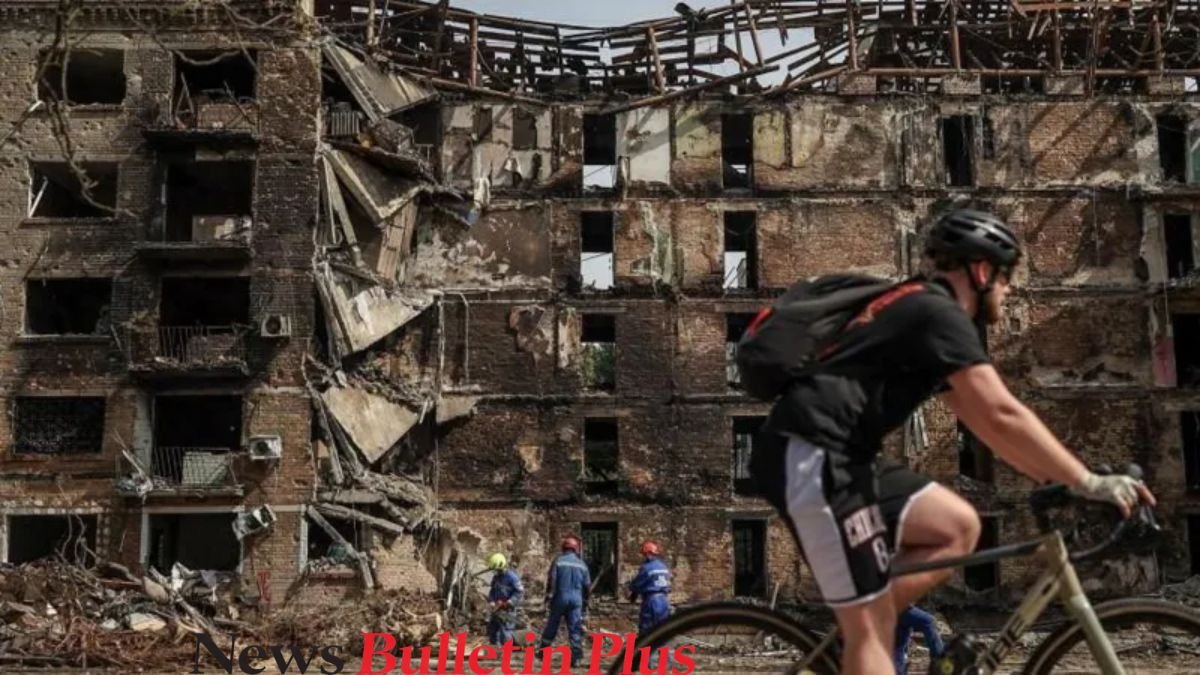
Russia has issued fresh warnings of intensified military action against Ukraine’s capital, raising fears of another dangerous phase in the ongoing Russia-Ukraine war. The latest threat came as officials in Moscow signaled that more attacks on Kyiv could follow recent drone and missile operations that have already damaged infrastructure and increased civilian anxiety.
The renewed tension has also prompted several governments to advise citizens to reconsider travel plans and, in some cases, urged Foreign nationals to leave Ukraine while security conditions remain unstable. The developments have added to growing worries over wider regional instability and rising Eastern European tensions.
According to reports from international media and regional analysts, the latest warnings reflect an increasingly aggressive tone from Russian officials as battlefield pressure continues in several areas of eastern and southern Ukraine.
What Happened
The latest Russia against Kyiv strikes warning emerged after Russia accused Ukraine of escalating attacks inside Russian territory and targeting border regions with drones. Moscow said it reserved the right to respond with stronger military measures, including additional strikes on Kyiv and other major Ukrainian cities.
Air raid alerts were reported in multiple parts of Ukraine following the statement. Ukrainian officials said air defense systems remained active around the capital amid fears of another large-scale aerial assault.
Residents in Kyiv described a tense atmosphere overnight. Many spent hours in shelters after warning sirens sounded across the city. Local authorities urged civilians to remain alert and prepare for possible emergency disruptions, including power outages and transport delays.
The Ukrainian military said it had intercepted several incoming drones in recent attacks, though falling debris reportedly caused damage in residential districts. Emergency crews were deployed across affected areas as investigations continued.
Security analysts say the latest Kyiv attack warning appears designed not only to pressure Ukraine militarily but also to send a political message to Western allies continuing to provide military and financial support to Kyiv.


Background of the Story
The conflict between Russia and Ukraine began in 2014 following Russia’s annexation of Crimea, but the situation dramatically escalated in February 2022 when Moscow launched a full-scale invasion.
Since then, Kyiv has repeatedly faced missile and drone attacks targeting energy facilities, military positions, and urban infrastructure. Although Ukraine strengthened its air defense systems with Western assistance, Russian aerial campaigns have continued at different stages of the war.
Over the past year, both sides have increased the use of long-range drones. Russian authorities claim Ukrainian attacks inside Russia have intensified, while Kyiv argues it has the right to strike military-related targets connected to the invasion.
The current Ukraine conflict latest developments come during a period of heightened battlefield uncertainty. Fighting continues along several front lines, particularly in eastern Ukraine, where both armies are attempting to gain strategic advantages before expected summer military operations.
Military experts believe the renewed rhetoric from Moscow may signal preparations for broader operations targeting logistics hubs, government facilities, and critical infrastructure in Ukraine’s capital.
Reactions and Statements
Ukrainian President Volodymyr Zelenskyy condemned the latest threats and said Ukraine would continue defending its territory despite mounting pressure.
In a statement shared by Ukrainian officials, Zelenskyy accused Russia of attempting to intimidate civilians through repeated aerial attacks. He also called on Western allies to speed up the delivery of air defense systems and military assistance.
Meanwhile, Russian officials defended their position by claiming that military action was a response to Ukrainian operations targeting Russian regions.
The United Nations and several European governments expressed concern over the rising violence. Diplomats warned that further escalation could worsen the humanitarian situation and increase risks for civilians across the region.
According to humanitarian agencies, millions of Ukrainians remain displaced by the war. Continued strikes on urban areas could place additional strain on emergency services, healthcare systems, and energy infrastructure.
Political analysts at the International Crisis Group say the latest exchange of threats reflects how difficult diplomatic negotiations have become. Several ceasefire efforts have stalled over the past two years, leaving little sign of a near-term political settlement.
Global and Political Impact
The latest Russian military threats are being closely watched by NATO members and neighboring European countries. Governments across Europe remain concerned that prolonged instability could create broader economic and security risks.
Energy markets also reacted cautiously following the developments. Investors fear that deeper escalation could affect regional supply chains, fuel prices, and international trade routes.
Some foreign embassies updated travel advisories after the warnings, particularly for Kyiv and surrounding regions. Several countries encouraged citizens to monitor local security updates closely.
The conflict has already reshaped European defense strategies. NATO members have expanded military spending, strengthened border security, and increased coordination on intelligence sharing since the invasion began.
Experts say ongoing attacks and counterattacks may further harden political positions on both sides. That could complicate future negotiations and increase the possibility of a prolonged war of attrition.
At the same time, humanitarian organizations warn that civilians continue paying the highest price. Repeated attacks have disrupted schools, hospitals, transport systems, and electricity supplies in many parts of Ukraine.
Key Takeaways
- Russia warned of possible new strikes targeting Kyiv.
- Ukrainian air defenses remain on high alert after recent drone attacks.
- Several governments advised citizens to reconsider travel to Ukraine.
- The situation has intensified wider war escalation Ukraine concerns.
- Analysts fear the conflict could enter another dangerous phase during the coming months.
Timeline of Recent Events
February 2022
Russia launched its full-scale invasion of Ukraine.
2023
Ukraine increased long-range drone operations while Russia intensified missile attacks on infrastructure.
Recent Weeks
Cross-border drone incidents and military exchanges increased between both sides.
Latest Development
Russia issued new warnings about potential strikes on Kyiv following accusations against Ukraine.
Expert Analysis
Defense experts say modern warfare in the Russia-Ukraine conflict has increasingly focused on drones, missile systems, and psychological pressure.
Michael Clarke, a British defense analyst frequently cited by international media, recently noted that attacks on major cities often aim to weaken public morale as much as military capability.
Other regional experts argue that the latest threats may also be linked to political calculations ahead of future international negotiations or military aid discussions in Western capitals.
Some analysts believe Moscow is trying to test Ukraine’s air defense capacity by increasing the frequency of attacks. Others warn that both sides appear prepared for a long conflict with no immediate diplomatic breakthrough in sight.
What Happens Next
Ukrainian authorities are expected to maintain heightened security measures in Kyiv and other major cities. Additional air defense deployments could be announced if the threat level increases further.
Western allies are also likely to continue discussions about military assistance packages for Ukraine. Air defense systems remain one of Kyiv’s most urgent requests as attacks continue.
Meanwhile, international observers will closely monitor whether Russia follows through on its latest warnings or whether diplomatic channels can reduce tensions in the coming weeks.
Why This News Matters
The latest threats against Kyiv highlight how fragile the security situation remains more than two years into the war. Each new escalation raises the risk of wider instability across Europe and deepens humanitarian suffering inside Ukraine.
For civilians living in Kyiv, the warnings are not just political statements. They affect daily life, personal safety, and the constant uncertainty surrounding the future of the country.
As the conflict continues, the world is watching closely to see whether diplomacy can regain momentum — or whether the war will move into an even more dangerous stage.
Source & Verification
This news topic is also reported by the international news organization BBC. Russia Warns of More Strikes on Kyiv as Security Concerns Grow Across Ukraine.
Risk Reference:
https://www.bbc.com/news/articles/c1e22n55zn4o