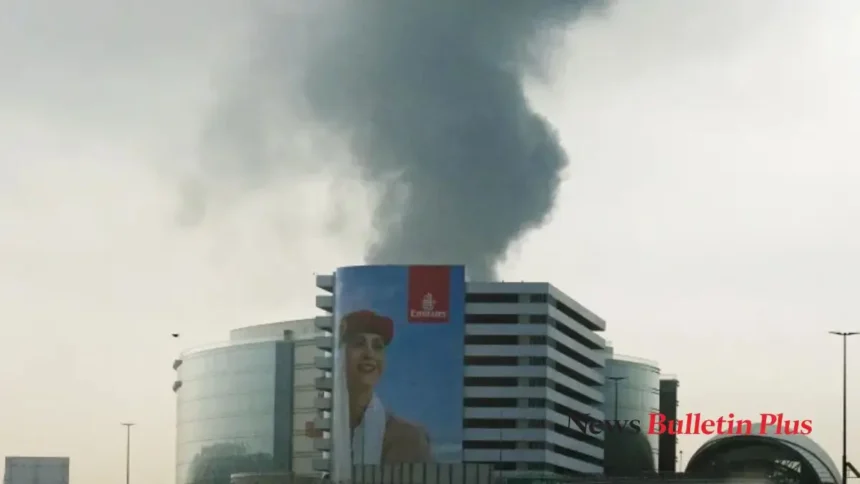
As tensions between Washington and Tehran continue to rise, fresh military exchanges between the United States and Iran have pushed the Gulf region into another period of uncertainty. The latest escalation came after Kuwait reported that its main international airport was struck during an overnight drone and missile assault, raising new concerns about regional stability and civilian safety.
The incident has intensified fears that the ongoing US Iran conflict could spill further across the Gulf, affecting transportation networks, energy routes, and diplomatic relations. Kuwaiti authorities said the attack caused significant disruption at the airport, while the United States responded with additional military operations against Iranian-linked targets. (Reuters)
Key Takeaways
- Kuwait reported damage to its international airport following a drone and missile attack.
- The United States launched retaliatory strikes against Iranian military facilities.
- Regional air traffic faced disruptions after the airport incident.
- Officials across the Gulf expressed concern about growing security risks.
- Analysts warn that continued escalation could threaten economic and energy stability across the Middle East. (Reuters)
What Happened
The latest confrontation unfolded after Iranian missiles and drones were reportedly launched toward targets in the Gulf region. According to regional officials, some projectiles were intercepted, while others either malfunctioned or failed to reach their intended destinations.
However, authorities in Kuwait confirmed that hostile drones struck part of Kuwait International Airport, causing injuries and damaging airport infrastructure. Officials temporarily suspended or diverted flights as emergency crews assessed the situation and secured affected areas. (ITVX)
The attack marked another significant development in the worsening security environment surrounding the Strait of Hormuz, one of the world’s most important shipping corridors.
Reports indicate that the Kuwait airport hit by drones incident caused disruption to passenger operations and prompted airlines to issue travel advisories. Some regional carriers adjusted schedules as authorities worked to restore normal services. (The Times of India)
Timeline of Events
Earlier Escalation
- Iranian missiles were reportedly launched toward regional targets.
- Air defense systems in Gulf countries intercepted several incoming threats.
Airport Strike
- Drones struck facilities at Kuwait International Airport.
- Airport operations were disrupted and flights were temporarily diverted.
US Military Action
- American forces carried out strikes on military facilities linked to Iran.
- US Central Command said the operations were conducted in response to threats against regional partners and military assets. (Sports Radio KWSN)
Background of the Story
The current crisis is rooted in months of military confrontations involving Iran, the United States, and regional allies. Despite previous efforts to maintain a fragile ceasefire, both sides have continued to accuse each other of violating understandings reached earlier this year.
The Gulf has remained particularly vulnerable because several countries host American military facilities while also maintaining close proximity to Iran. Kuwait, Bahrain, and other neighboring states have repeatedly found themselves caught between competing military and political interests.


Security experts note that attacks involving drones and missiles have become increasingly common across the region. These incidents highlight how modern conflicts can quickly affect civilian infrastructure, including airports, shipping lanes, and energy facilities. (Al Jazeera)
The latest Iran drone attack Kuwait episode demonstrates how regional tensions can move beyond military installations and impact transportation hubs used by thousands of civilians every day.
Reactions and Statements
Kuwaiti officials strongly condemned the attack, describing it as a dangerous assault on civilian infrastructure. Government representatives stated that emergency response teams moved quickly to secure the airport and protect travelers.
Meanwhile, US military officials said American forces intercepted several threats and conducted what they described as defensive operations against Iranian military positions. Washington argued that its actions were necessary to protect personnel, allies, and commercial maritime traffic in the Gulf. (New York Post)
Iranian officials, however, have maintained that their actions were responses to previous military moves by the United States. Statements from Tehran suggested that any further attacks on Iranian interests could lead to additional retaliation. (Al Jazeera)
Diplomatic observers say the exchange reflects the growing difficulty of restoring trust between the two sides despite intermittent negotiations.
Expert Analysis
Regional security analysts warn that the current situation represents more than a series of isolated military incidents.
According to Middle East security experts, attacks targeting airports and transportation infrastructure carry broader consequences because they affect civilians, international travel, and investor confidence. Even brief disruptions can create ripple effects throughout the region’s economy.
Experts also point out that the Gulf remains central to global energy markets. Any prolonged military confrontation could affect shipping activity and increase concerns about supply chain disruptions.
The emerging Gulf security crisis is being closely monitored by governments around the world because of its potential impact on oil prices, trade routes, and international security arrangements.
Global and Political Impact
The latest escalation comes at a sensitive moment for international diplomacy. Several countries have been encouraging renewed talks aimed at reducing hostilities and preventing a wider regional conflict.
However, the exchange of missile and drone attacks has complicated those efforts. Political analysts believe the latest violence could weaken confidence in ongoing negotiations and make future diplomatic breakthroughs harder to achieve.
The incident also highlights broader Middle East tensions, which have intensified due to multiple interconnected conflicts across the region. Governments in Europe, Asia, and North America are watching developments closely because instability in the Gulf can quickly influence global markets and security planning. (The Guardian)
Another concern involves maritime security. The Strait of Hormuz remains a critical route for global energy exports, and any disruption there could have worldwide economic consequences.
Related Developments
Several recent events have contributed to the current atmosphere of uncertainty:
- Increased drone activity across Gulf airspace.
- Reports of missile interceptions by regional defense systems.
- Growing military deployments around strategic waterways.
- Ongoing diplomatic discussions involving ceasefire arrangements.
- Expanded monitoring of commercial shipping routes. (Wall Street Journal)
These developments have reinforced concerns that the region may face additional security challenges if diplomatic efforts fail.
What Happens Next
The immediate priority for Kuwaiti authorities is restoring full airport operations and assessing the extent of the damage. Investigations are expected to continue while regional partners review security measures at key transportation and infrastructure facilities.
Meanwhile, international diplomats are likely to increase efforts to prevent further escalation. Whether those efforts succeed may depend on the willingness of both Washington and Tehran to return to meaningful dialogue.
The possibility of another Iranian missile attack or a broader US military response remains a major concern for regional governments and international observers alike.
Why This News Matters
The latest exchange between the United States and Iran is significant because it demonstrates how quickly regional confrontations can affect civilian infrastructure and international transportation.
The reported Kuwait airport damage underscores the risks facing countries located between larger geopolitical rivals. Beyond the immediate security concerns, the incident raises questions about the future of diplomatic negotiations, regional defense cooperation, and economic stability across the Gulf.
As the situation develops, governments, airlines, and international organizations will be watching closely for signs of either de-escalation or further conflict. For now, the latest strikes serve as a reminder that instability in the Gulf continues to carry consequences far beyond the battlefield. (Reuters)
Source & Verification
This news topic is also reported by the international news organization BBC. US and Iran Exchange New Strikes as Kuwait Reports Airport Attack.
Risk Reference:
https://www.bbc.com/news/articles/c5yx135yg53o