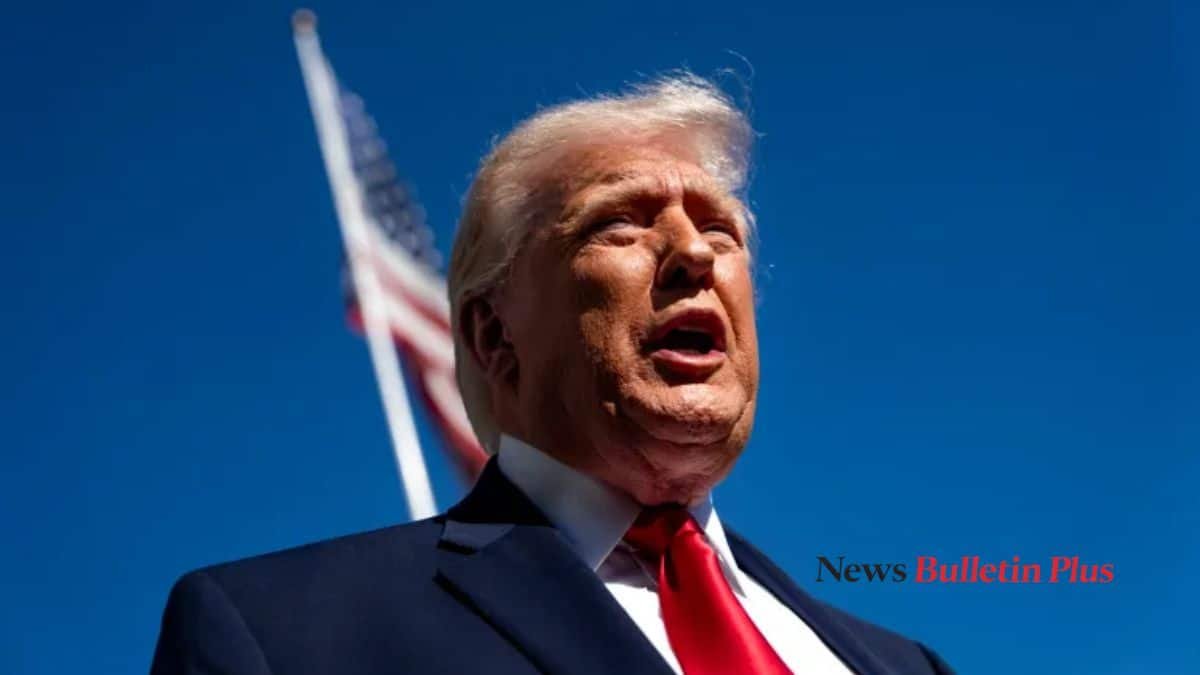
Trump Announces Strait of Hormuz Blockade: In a dramatic turn of events that could reshape global geopolitics, former US President Donald Trump has declared a Trump Strait of Hormuz Blockade, following the abrupt collapse of high-stakes diplomatic efforts between Washington and Tehran. The move has immediately intensified the Strait of Hormuz crisis, raising fears of a wider US Iran conflict escalation and sending shockwaves through global energy markets.
The announcement comes just hours after peace negotiations—reportedly involving mediators in Pakistan—ended without agreement, marking a significant setback in efforts to de-escalate one of the world’s most volatile rivalries.
What Happened
Trump’s declaration outlined a plan to impose a naval blockade in the Strait of Hormuz, one of the world’s most critical maritime chokepoints. Nearly 20% of global oil shipments pass through this narrow waterway, making any disruption a serious threat to international markets.
According to early reports, the proposed Hormuz shipping blockade would involve coordinated naval deployments aimed at restricting Iranian-linked vessels and monitoring maritime traffic. The US Navy action Iran scenario is already being discussed among defense analysts, with some warning that enforcement could quickly spiral into direct confrontation.
Initial reactions in financial markets were swift. Oil benchmarks jumped within hours, reflecting fears of a looming global oil supply disruption and renewed instability in the Middle East.
Background of the Story
Tensions between Washington and Tehran have been building steadily throughout 2026. The latest round of negotiations—often referred to in diplomatic circles as the “Pakistan peace talks failure”—was seen as a last opportunity to avoid further escalation.
The talks reportedly focused on maritime security, sanctions relief, and regional de-escalation. However, disagreements over Iran’s regional activities and allegations surrounding the so-called “Iran toll ships issue” created a deadlock.
Experts note that this latest breakdown reflects deeper structural issues in US foreign policy Iran relations. Years of mistrust, shifting alliances, and conflicting strategic goals have made sustained diplomacy increasingly difficult.


Historically, the Strait of Hormuz has been a flashpoint. Previous incidents involving tanker seizures and naval standoffs have underscored how quickly tensions can escalate in the region.
Reactions and Statements
Global reactions have been swift and sharply divided.
US officials aligned with Trump’s stance argue that a firm response is necessary. “This is about protecting international shipping and ensuring stability in global trade routes,” a senior policy adviser reportedly said.
Iranian authorities, however, condemned the move as provocative. State media described the blockade plan as an act of aggression, warning that Tehran would respond decisively to any attempt to restrict its maritime activities.
Meanwhile, international organizations and allies have urged restraint. Analysts at the International Crisis Group warned that the situation could evolve into a broader geopolitical crisis 2026, particularly if miscalculations occur at sea.
European leaders also expressed concern over potential Middle East war tensions, calling for an urgent return to diplomacy.
Global or Political Impact
The implications of the blockade announcement extend far beyond the Gulf region.
Energy Markets Under Pressure
Oil prices have already begun to climb amid fears of oil prices surge global trends. According to early estimates from energy analysts, even a partial disruption in Hormuz traffic could push crude prices above $120 per barrel.
This raises the specter of a wider global energy crisis, especially for countries heavily dependent on imported oil.
Trade and Shipping Risks
The naval blockade impact could severely affect international shipping. Insurance premiums for vessels transiting the region are expected to rise sharply, while some shipping companies may reroute cargo entirely—leading to international trade disruption.
Regional Stability
The announcement has added fuel to already heightened Middle East war tensions, with neighboring countries preparing for potential fallout. Military readiness levels in several Gulf states have reportedly increased.
Expert Analysis
Security analysts say the situation is highly unpredictable.
“Blockades are inherently risky,” said a maritime security expert quoted by Reuters. “Even limited enforcement can trigger unintended clashes, especially in such a congested and politically sensitive waterway.”
Economists, on the other hand, warn of broader economic consequences. Data from global financial institutions suggests that prolonged disruption in Hormuz could shave up to 1% off global GDP growth, particularly if energy prices remain elevated.
There is also concern about escalation pathways. A single incident—such as the interception of a tanker—could rapidly escalate into a direct military confrontation.
Timeline of Events
- Early 2026: Rising tensions between the US and Iran over regional activities
- March 2026: Diplomatic efforts intensify, with Pakistan hosting mediation talks
- April 2026: Negotiations collapse amid unresolved disputes
- April 12, 2026: Trump announces blockade of the Strait of Hormuz
What Happens Next
The coming days will be critical.
Military analysts expect increased naval deployments in the region, though it remains unclear how quickly the blockade would be implemented. Diplomatic backchannels may still be active, with some countries attempting to revive negotiations.
There is also the possibility of economic countermeasures. Iran could respond by targeting shipping routes or leveraging its regional alliances, further complicating the situation.
Why This News Matters
The Trump Strait of Hormuz Blockade is not just another political headline—it has real-world consequences that could affect millions of people.
From rising fuel prices to potential disruptions in global trade, the ripple effects are likely to be felt far beyond the Middle East. For many countries, especially those reliant on energy imports, this could mean higher inflation and economic strain.
More importantly, the situation highlights how fragile global stability remains. A single decision in a strategic waterway can reshape markets, shift alliances, and potentially lead to conflict.
Key Takeaways
- Trump has announced a blockade of the Strait of Hormuz after failed US-Iran talks
- The move risks a major US Iran conflict escalation
- Global oil markets are already reacting to fears of supply disruption
- Experts warn of serious economic and security consequences
- Diplomatic efforts may still continue, but tensions remain high
Conclusion
As the world watches closely, the unfolding Strait of Hormuz crisis could become one of the defining geopolitical moments of 2026. The failure of diplomacy and the shift toward military posturing signal a dangerous phase in US-Iran relations.
Whether this leads to open conflict or renewed negotiations will depend on the choices made in the days ahead. For now, uncertainty dominates—and the stakes could not be higher.
Source & Verification
This news topic is also reported by the international news organization Al Jazeera. Trump Announces Strait of Hormuz Blockade After US-Iran Peace Talks Collapse
Risk Reference: